

Recipe Overview
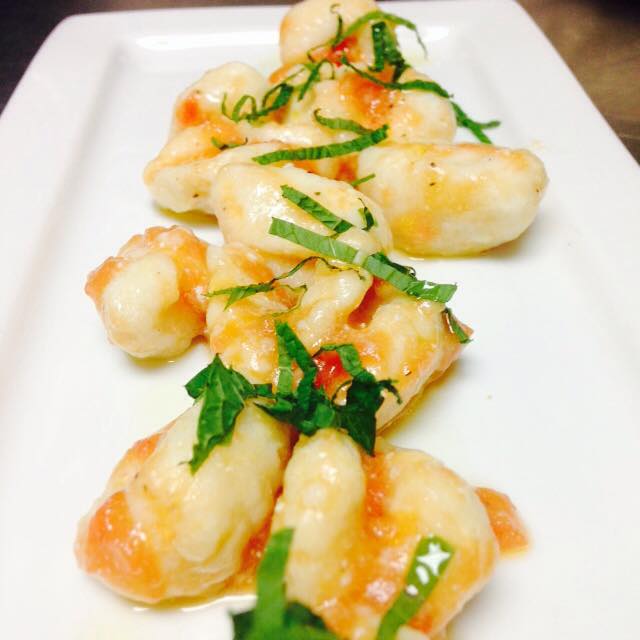
This elegant ricotta gnocchi preparation celebrates the delicate texture of well-drained ricotta, gently bound with eggs and flour to create light dumplings with a soft and refined character. Finished with fresh tomatoes, chilled reduced tomato juice, mint chiffonade, and fragrant mint oil, the dish expresses freshness, simplicity, and seasonal Tuscan elegance.
Ingredients
- 900 g ricotta, well-drained
- 2 whole eggs
- 80 g 00 flour, plus extra for dusting
- 60 g Parmigiano Reggiano, finely grated
- 6 g fine sea salt
- 1 g freshly ground black pepper
- 700 g Roma tomatoes, peeled, seeded, and diced
- 120 ml tomato juice, reduced and chilled
- 10 g fresh mint, chiffonade
- 30 ml mint oil or extra virgin olive oil infused with mint


Preparation
- Combine the ricotta, eggs, flour, Parmigiano, salt, and pepper. Mix gently until the dough is soft and uniform. Refrigerate for 15 to 20 minutes.
- Dust a tray lightly with flour. Using floured hands or spoons, shape walnut-sized dumplings and place them on the tray. Chill briefly to help maintain their delicate structure.
- Prepare the garnish by peeling, seeding, and dicing the Roma tomatoes. Reduce the tomato juice until lightly syrupy, then chill. Slice the mint into fine chiffonade and prepare the mint oil.
- Bring a large pot of salted water to a gentle boil. Cook the ricotta gnocchi until they float, then allow them to cook 30 to 60 seconds longer before lifting carefully with a slotted spoon.
- Dress gently with fresh tomatoes, reduced tomato juice, mint oil, and freshly cracked pepper. Finish with mint chiffonade and serve immediately.
History & Tradition
Ricotta gnocchi belong to a family of Italian preparations that celebrate restraint, freshness, and a deep respect for dairy, flour, and careful handwork. In Tuscany, dishes like this reflect the regional love for simple ingredients transformed through technique into something graceful and memorable.
This version, brightened with fresh tomato and mint, gives the classic preparation a lighter seasonal character while keeping the spirit of the original intact. It is a dish that fits beautifully into the Tuscany Cuisine philosophy of editorial recipe storytelling, menu integration, and practical kitchen functionality.
Explore more handmade pasta history in the Tuscany Cuisine journal: Flour & Water Pasta Journal .